
With Particular Reference to its Filmic Outputs
I wrote this essay in September 2013, while working to catalogue and review the film archive of VisitBritain. It was intended to provided contextualising information for their film collection – particularly in reference to the 1930s films produced by TIDA.
This material was published (without my knowledge) by the Government Communications Service in 2017 here.
If you have any questions about this essay – or the associated British Council Film Collection – please feel free to get in touch. I retain copies of my research notes, photos from The National Archives, etc., and am happy to assist researchers where possible.
– Sarah Cole
November 2026
The Travel Association of Great Britain and Northern Ireland
1929
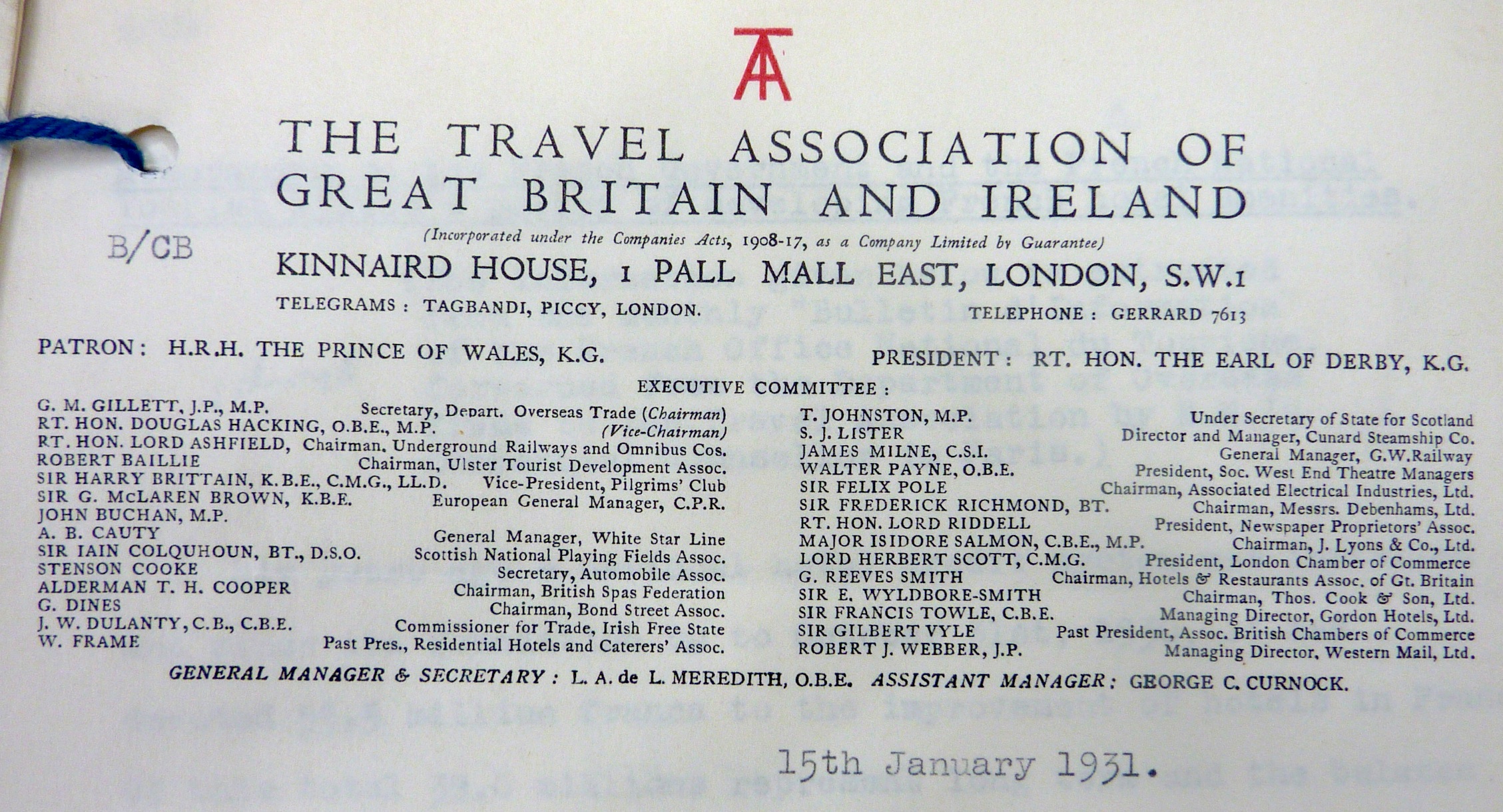
The Travel Association of Great Britain and Northern Ireland (TA) was created in December 1928. Government officials were looking for a suitable replacement for the moribund ‘Come to Britain’ movement and were particularly interested in increasing the amount of money spent by American tourists in Britain. Individuals such as Douglas Hacking (Department of Trade), Lord Waldorf Astor, and then-Chancellor of the Exchequer Winston Churchill corresponded over the issue, but it was felt that it would ‘be better that private enterprise should set up an organisation themselves and that the movement should mainly be financed by those who would directly benefit’.
Douglas Hacking made enquires with 20–30 industry leaders and found many of them interested in the notion of such an enterprise. Thus, a number of powerful individuals – such as Gordon Selfridge (chairman of the department store), S.J. Lister (manager of the Cunard Steamship Company), and Lord Baden-Powell – came to back the initiative and, with Lord Derby acting as the Association’s president, the Association incorporated on 15th April 1929, independent of Government control.
From TNA file BT 56/19
Its aims were:
‘To increase the number of visitors from overseas to Great Britain and Ireland; to stimulate the demand for British goods and services and to promote international understanding by every means, and in particular:–
- by the stimulation abroad of interest in Great Britain and Ireland;
- by the promotion of voluntary co-ordination in advertising;
- by the collection from official and other sources abroad of information useful to members;
- by the examination of customs and passport facilities, etc.;
- by the examination of laws affecting the overseas visitor;
- by the provision of information useful to members.’
Funded by subscriptions and a small Government grant, the Association immediately began to pursue these aims by disseminating details and advice about the various beauty spots and holiday resorts in the British Isles to tourists, as well as by sending free information, including leaflets and photographs, to the foreign press. Similarly, articles on the British Isles were also released for publication, and travel posters were donated to foreign hotels and clubs. Overseas wireless broadcasts, often in the form of short lectures, were also employed, and the Association soon also attended overseas exhibitions.
It was assisted in these endeavours by the Department of Trade (DOT); the Association enjoyed a close relationship with the DOT, who assisted ‘through the overseas services of the Department or by bringing pressure to bear on bodies, corporations, and, if necessary, other departments to remove hinderances and obstructions’. In addition, Louis Beale, former trade commissioner in New Zealand, was made director of the Travel Association, and L.A. de la Meredith was seconded by the DOT to act as his secretary.
In 1930, H.R.H. the Prince of Wales became the Association’s first patron; around this time, the Association began using a the motif of a ‘Lion of England’ (a seemingly crowned lion, in a ‘passant gardant’ position – a traditional heraldic symbol of Britain and its monarchs) on some promotional items.
Later that year, the TA acknowledged the potential that film held for generating tourism – travelogues already a regular feature in cinemas – and formed an Advisory Committee for Films. Though very little documentation on this committee survives, it is thought that it was initially concerned with procuring distribution rights for existing films, and did not produce its own titles until 1932.
The Travel and Industrial Development Association of Great Britain and Northern Ireland (TIDA)
1932
In 1931, the Local Authorities (Publicity) act came into law, which enabled individual town councils and municipal boroughs to subscribe to the Association. By 1934, one-third of the Association’s total income would derive from local authorities, which recognised in travel publicity an ideal opportunity for increasing tourism, thereby benefitting local business.
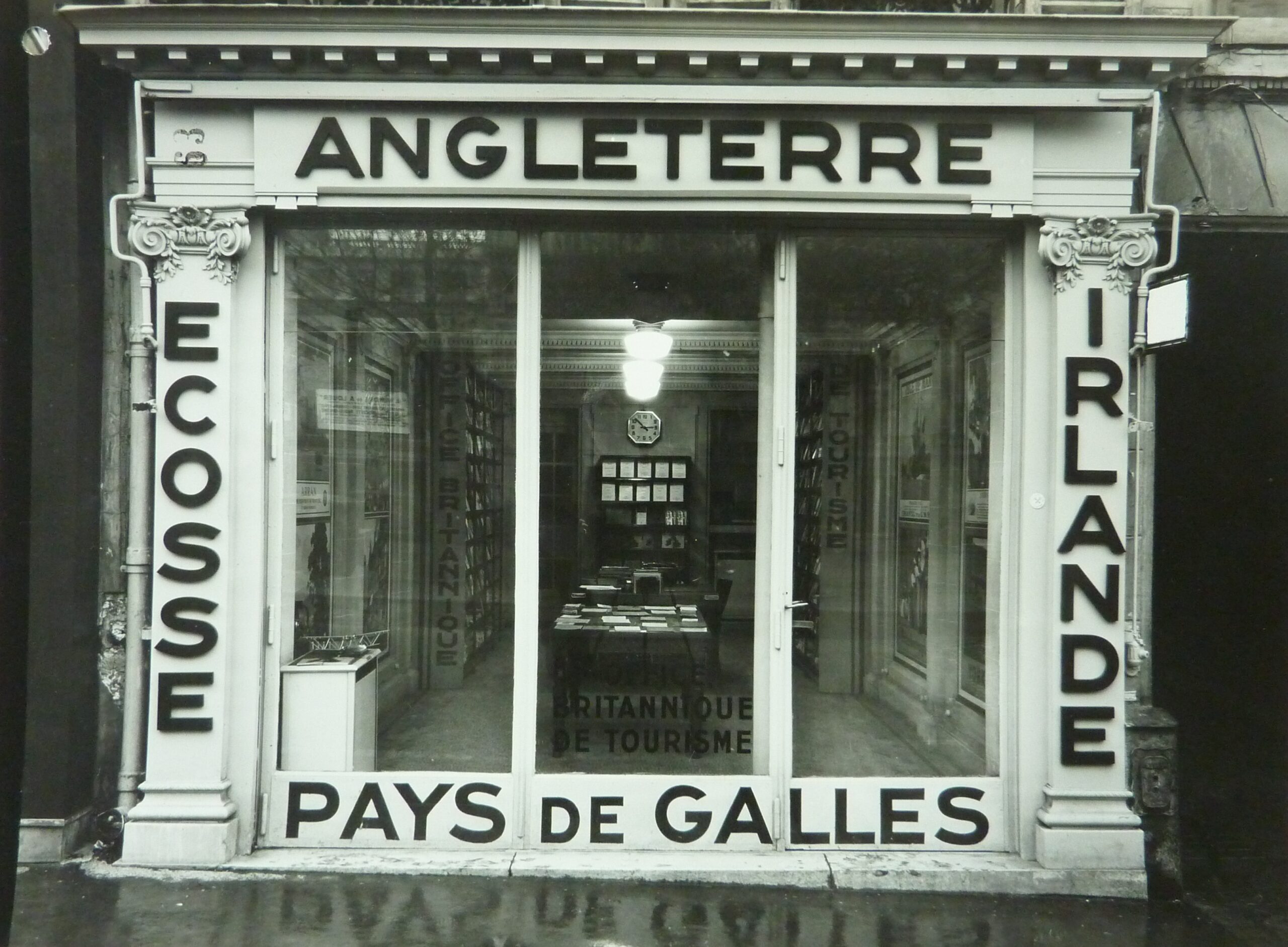
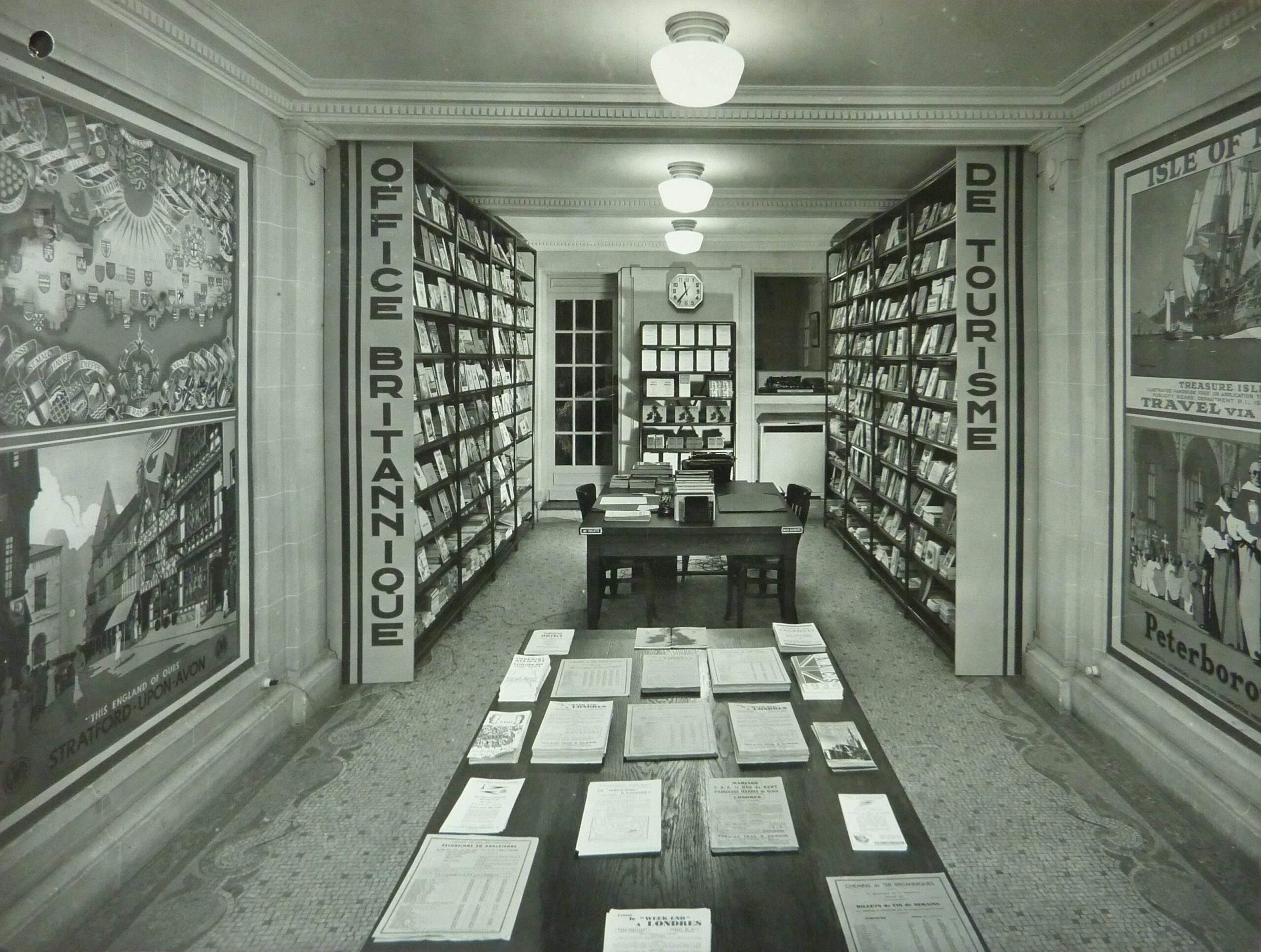
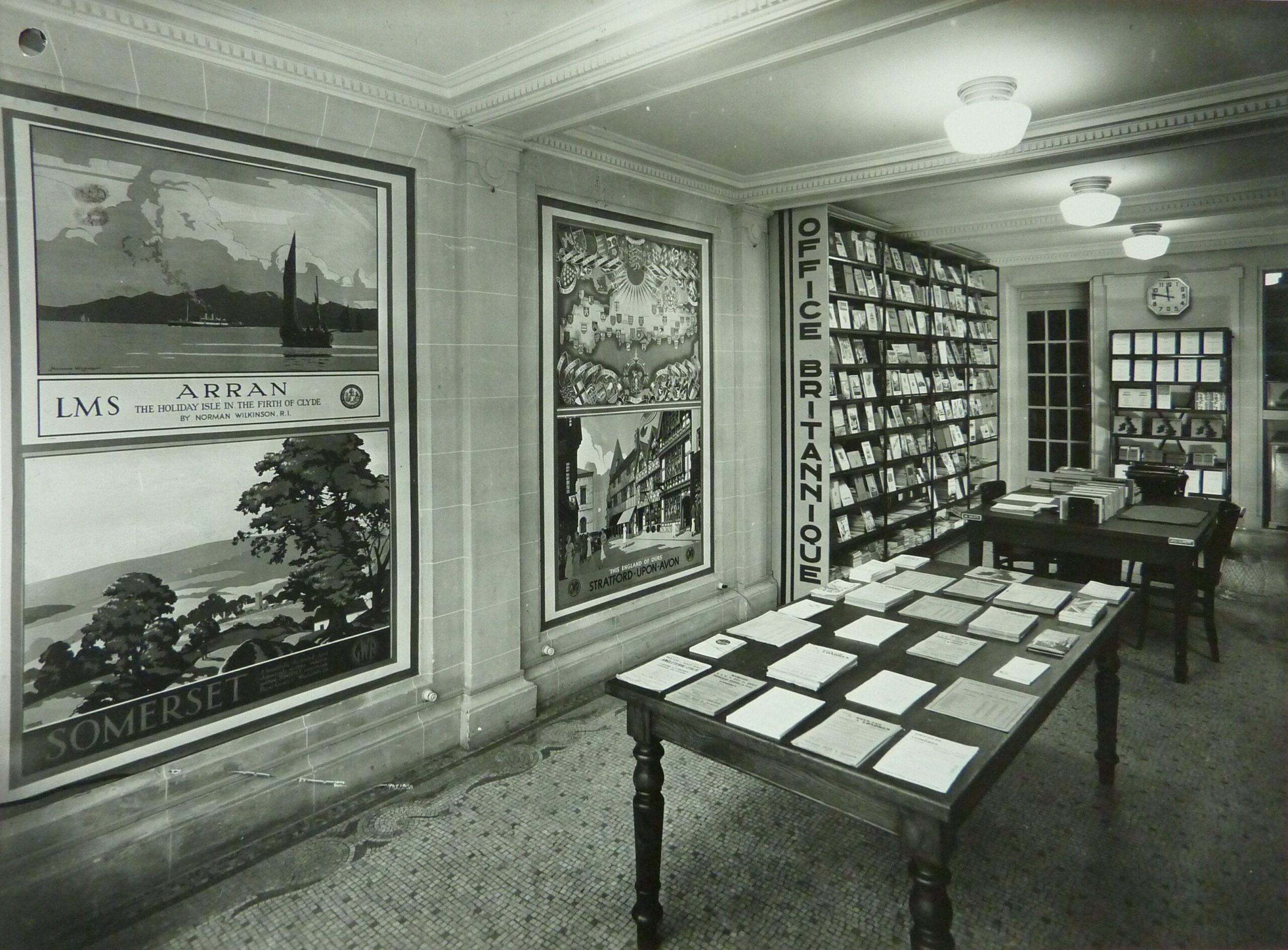
The Travel Association, buoyed by this industrial turn and encouraged by the Board of Trade, officially changed its name to ‘The Travel and Industrial Development Association of Great Britain and Northern Ireland’ (TIDA) in February 1932. This change of tack was also prompted by the effects of the economic depression and the wavering financial support of the Government, though by this stage the Association had offices in Buenos Aires, Paris, and New York.
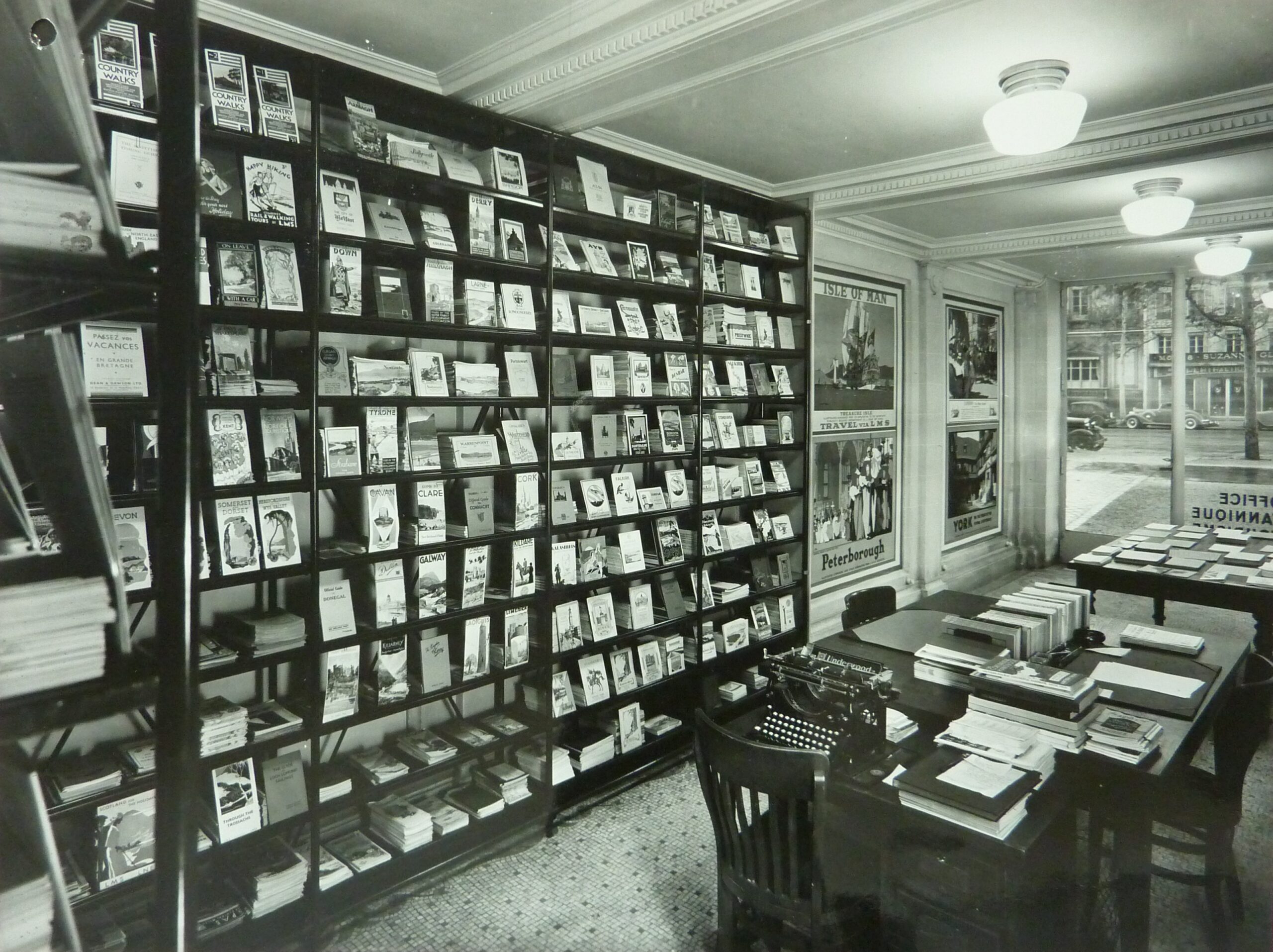
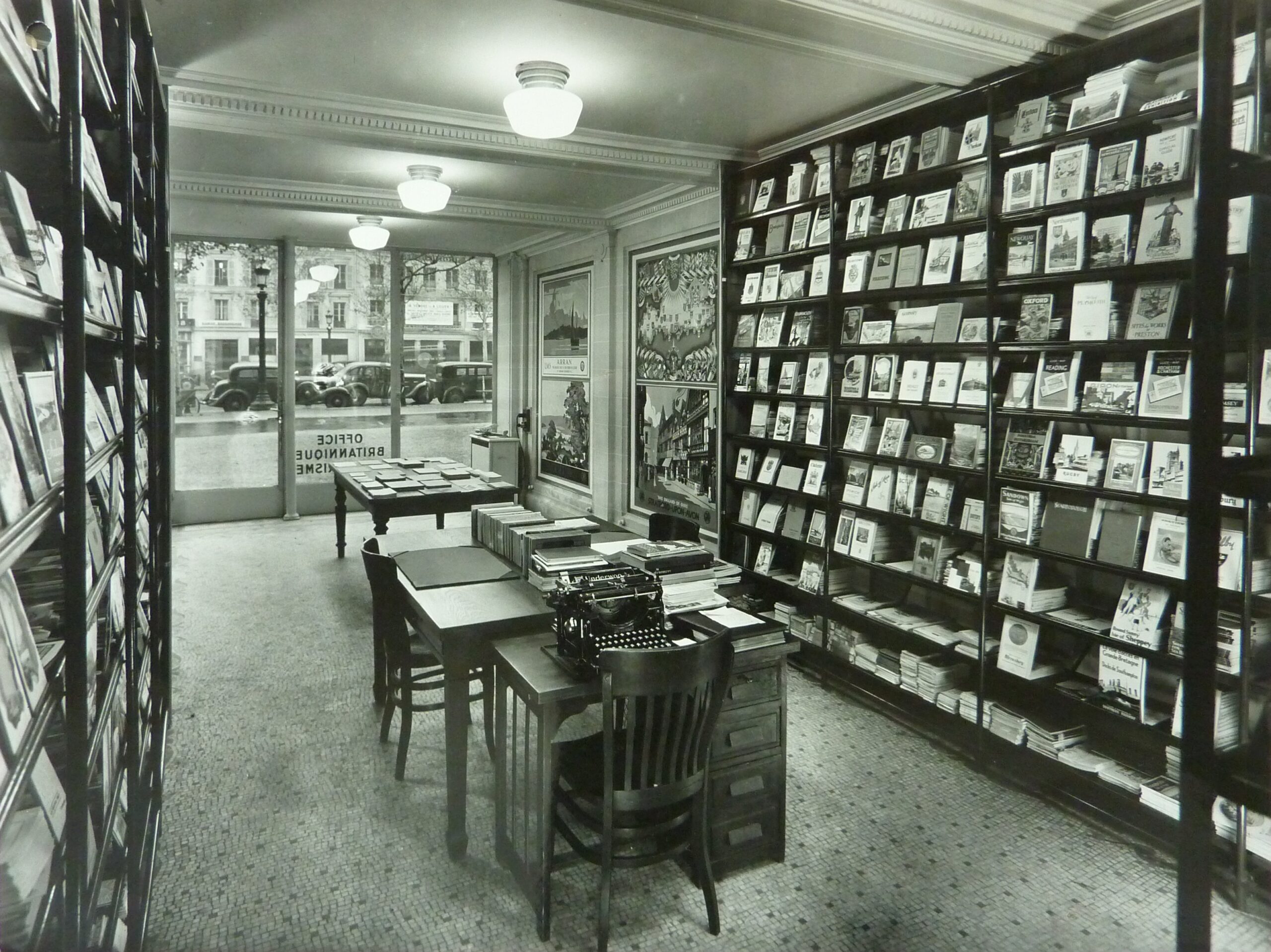
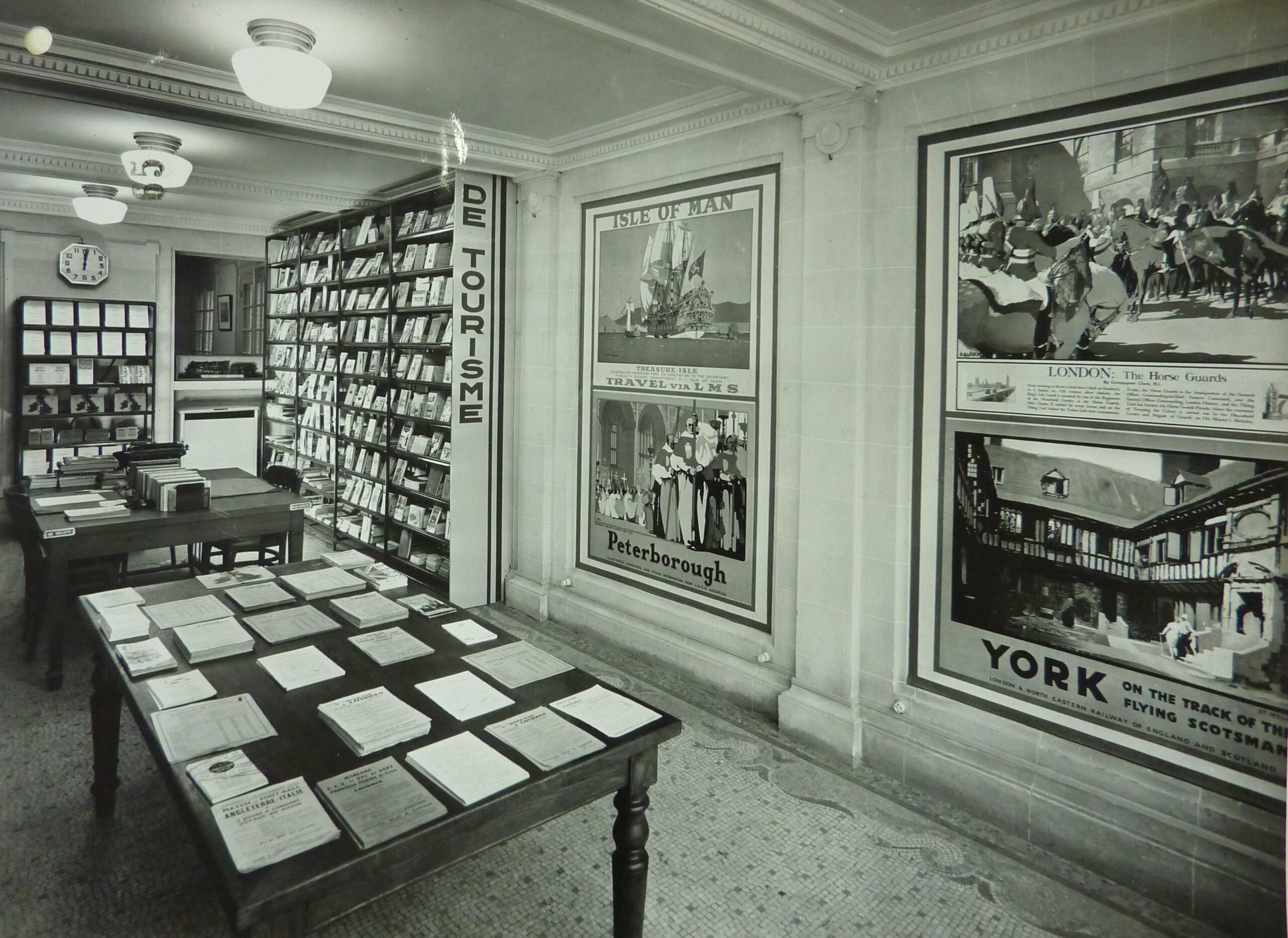
From TNA file T219/51
1932 also saw TIDA establishing its own film unit. Led by Marion Grierson, sister of renowned ‘father of documentary’ John Grierson, the unit operated in informal partnerships with other established film units. Working with tight budgets owing to the low income of TIDA, members of the unit would turn their hand to camerawork, editing, or scriptwriting. This unusual method of working would persist until 1939 and is the source of varied issues (often pertaining to ownership).
Marion had previous experience of working with her brother in the Film Unit of the Empire Marketing Board (EMB), so it is little surprise that the first partnership was with them. Here TIDA’s first two silent films were produced – Glassmakers of England and The English Potter; the industrial nature of which was a result of the recent organisational changes.
The partnership with the EMB came to an end when the EMB closed down in touch in September 1933 and its Film Unit moved to the General Post Office (G.P.O.), which TIDA could not work with for political reasons. A touch of nepotism is apparent in the TIDA Film Unit’s next partnership with Strand Film Company, the head of which – Donald Taylor – was Marion Grierson’s husband.
Though the relationship with Strand was recognised as ‘complicated’ by the TIDA secretary, the TIDA Film Unit now began to produce sound titles, including Around the Village Green, Beside the Seaside, For All Eternity, Healing Waters, Heart of an Empire, Key to Scotland, So This is London, and So This is Lancashire; the latter title perhaps the result of the Lancashire Industrial Development Council being one of the most generous contributors to TIDA in 1932. The documentary as we know it today was still in its infancy as a genre, and many of the titles the unit produced have experimental touches. It also continued to produce both purpose-made silent films and silent adaptations of its sound titles.
These titles were distributed both theatrically (in 21 countries) and non-theatrically overseas, along with films TIDA held the distribution rights to, and reached a massive audience; it was said in 1937 that ‘It has been found impossible to ascertain how often [the TIDA films] have been shown in each country, but reports from Sweden showed that So this is London has been seen by 400,000 people in public cinemas’.
In 1935 the British Council – a cultural propaganda organisation – was founded. Though the Government felt that TIDA and the Council were quite distinct entities in purpose, there was an undeniable overlap. It was said that ‘the essential difference between the two bodies is that one (the Association) is primarily commercial, the other (the Council) political – which accounts for the difference in the ratio of Government subsidies. But it cannot be denied that, while the ends which the two bodies have in view differ fundamentally, the methods which they adopt have a certain similarity.’
The Council had a definite interest in films as form of cultural propaganda but, despite it having a much larger budget than TIDA, no resources to establish its own Film Unit. In 1936, Rex Leeper of the Foreign Office proposed a Joint Committee on Films (JFC) between TIDA and the Council, both to explore how the TIDA Film Unit might be utilised in the production and overseas distribution of cultural films, and to take responsibility for the overseas distribution of British newsreel and other documentary films.
This suggestion was taken up and the first meeting was held in April 1936. Committee members consisted ‘of representatives of both bodies together with the Foreign Office, the Department of Overseas Trade, the Post Office and the British Film Institute (Mr. Oliver Bell) under the Chairmanship of Mr. Phillip Guedalla, with Mr. A. F. Primrose as secretary. The Post Office was originally represented by Mr. John Grierson, but when he left the Post Office Film Unit, his place was taken by Mr. Highet […] The Committee availed itself of the services of the Travel Association’s Film Department, as this body had been engaged in this work since 1932 and had the necessary technical knowledge and expertise. The Association provided the secretariat and the executive machinery of the Committee, since it had its own Film Unit with technical equipment, film storage vaults, and technical staff.’
The committee met regularly, discussing a wide range of topics from distribution to foreign-language dubbing (though initially most items only had a British soundtrack). By 1939, the committee had begun to commission its own films – in part thanks to a sizeable grant from the British Council – though some of these had to be completed by the Council in1940. The ownership of these titles is unclear, though they were invariably promoted as TIDA titles (for reasons explained below).
‘In September, 1938, the Department of Overseas Trade requested the committee to devise means for using the cinema in the British Pavilion at the New York World’s Fair to the best advantage, and to arrange for the despatching of the films. The committee inspected 184 films of which 115 were approved and sent to New York. In collaboration with the Newsreel Association it arranged for the composite weekly newsreel “British News” to be sent out each week… At the close of the New York World’s Fair, Lord Lloyd, then Colonial Secretary, arranged for “British News” to be sent out to the Colonies.’
The films selected caused some controversy, particularly with the founders of the Documentary Movement, but the pavilion was ultimately viewed as a success in encouraging pro-British feeling, with an estimated 2000 people passing through its cinema every day.
Another output of the committee was the Films of Britain catalogues, the first edition of which came out in 1939 (later editions would be published by the British Council, with the 1940 edition notably disguised as a TIDA publication). These booklets were sent out to potential distributors or purchasers of films and featured both TIDA-made films and others TIDA held the distribution rights to.
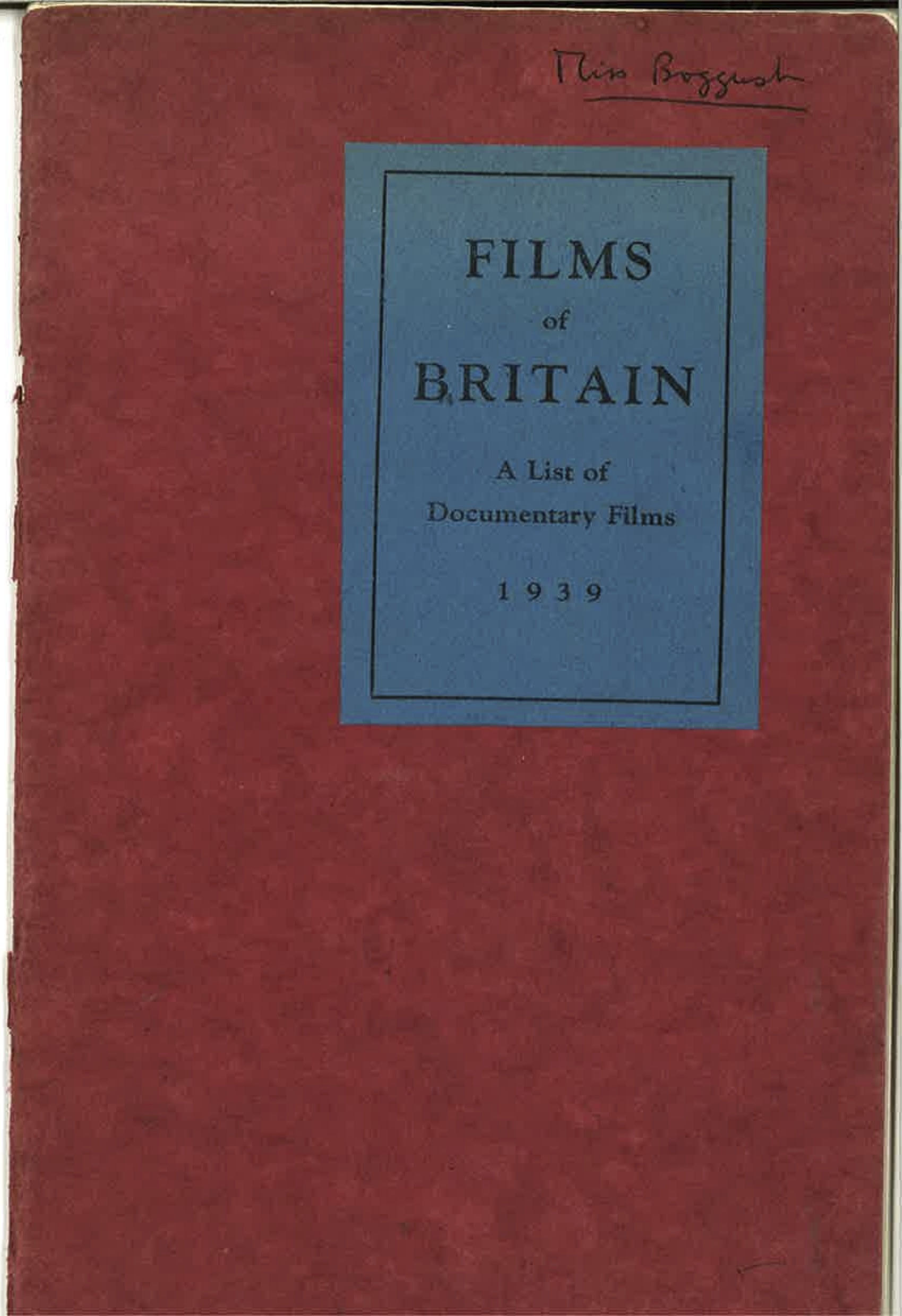
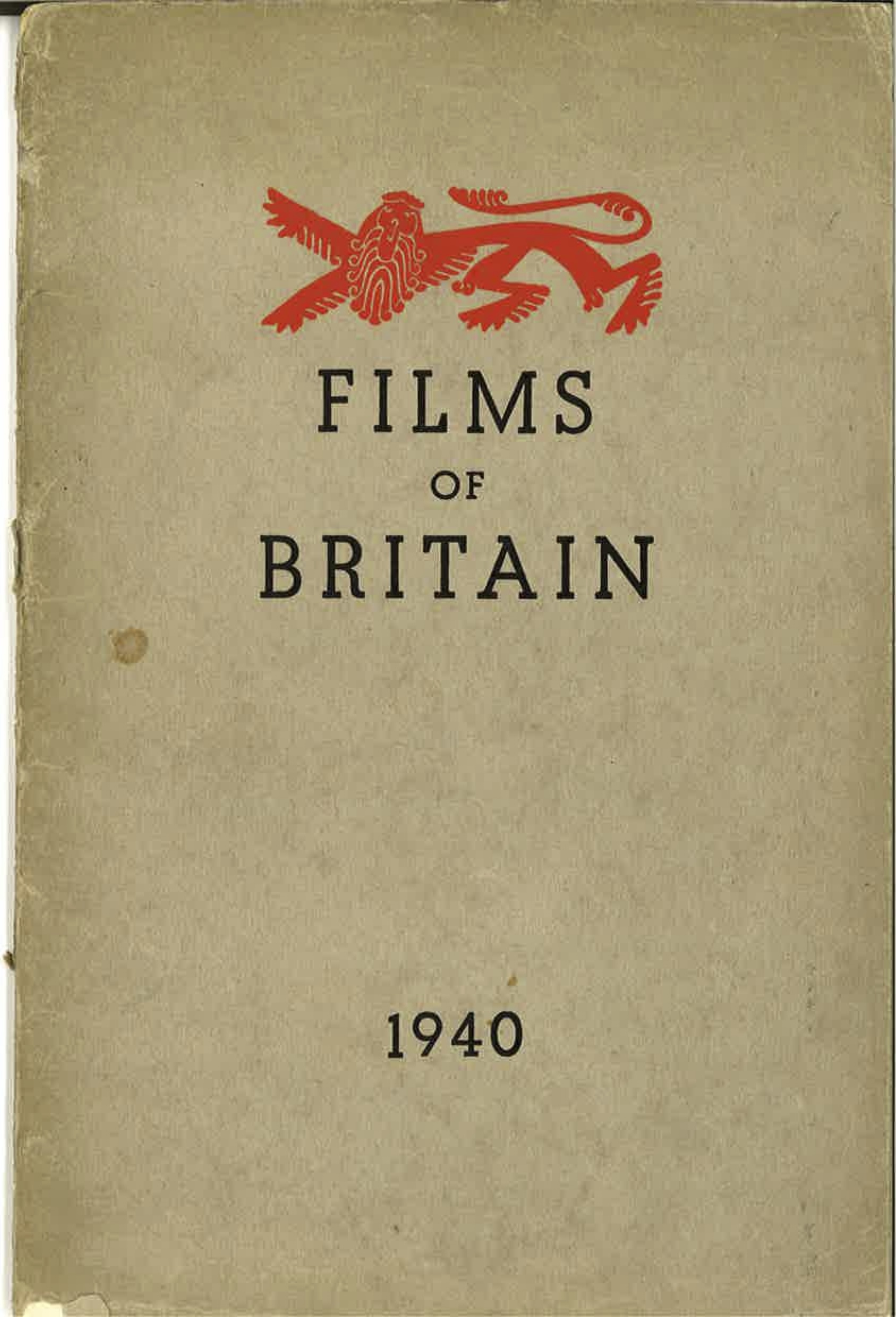
Held by the British Council
The Committee operated until September 1939 when Britain entered World War Two. With the outbreak of war, it was clear that TIDA, still chiefly concerned with tourism, could not continue to operate as it had in peacetime. Not wanting the distribution networks and expertise of the JFC and the TIDA Film Unit to go to waste, ‘on the recommendation of the Vansittart Committee arrangements were made for the British Council to take over the film department of the Travel Association. This changeover took place in October, 1939, and became the Film Department of the British Council.’ Thus the film-related TIDA secretariat (including Mr Primrose) became British Council staff in the new Film Department, and the Joint Film Committee (which was retained and expanded to include the Dominions Office, Colonial Office, and H.M. Government Cinematograph Adviser) became the British Council Film Committee.
The film library of TIDA (comprising of over 60 titles) passed over to the Council, and films that had still been in production in September 1939 were taken on and completed by them, though they made a point of leaving the TIDA logo on these films. The purpose of this was twofold – ‘That, both on account of the goodwill contained in it and to avoid giving the audience any suspicion of the ulterior motive of the film the title TIDA should be retained on films distributed under the auspices of the British Council’s Film Committee.’ It was also suggested that ‘while the Committee would now be the Film Committee of the British Council, the name Joint Committee on Films should be retained so long as the Travel Association remained in being, because (a) The Travel Association can distribute films in the United States while the British Council is debarred from doing so, and (b) it would avoid the British Council being accused of distributing films of a political or belligerent nature.’
Thus TIDA wound down its other activities, closing its overseas offices in New York, Paris, and Amsterdam (the latter of which had only been open for six months), and essentially began to operate on a ‘care and maintenance’ basis with a skeleton staff.
The Travel Association of the United Kingdom of Great Britain and Northern Ireland
1945
During the war, the Association spent much of its time planning for post-war development. They continued to have AGMs, and in 1944 the Association produced, at the request of the Government, a report entitled ‘Britain – Destination of Tourists’. This report presented a strong case for investing in and promoting tourism in post-war Britain (which it anticipated being revolutionised by increased air transport), with a focus on the economic aspects, and called for a Government-funded tourist organisation. The Government was convinced by this, and agreed to fund the Association to do some exploratory work in this area.
Following this, the Association decided to discontinue its industrial promotions at the 1945 AGM, and its name was changed to ‘The Travel Association of the United Kingdom of Great Britain and Northern Ireland’.
As a result of the aforementioned exploratory work, the British Tourist and Holidays Board (BTHB) (an unincorporated body) was established in 1947 to ‘foster and develop the tourist, catering and holiday services’. From this point, it was decided that the Travel Association should effectively act as the tourist division of the BTHB whilst maintaining its independence and structure. This was just in time for the 1948 Olympic Games to be held in Britain, which saw record numbers of visitors to the country. Other post-war highlights included the re-opening of the New York offices and a visit from H.R.H. Princess Elizabeth in 1949.
During this time, it does not appear that the Association put much effort into films (aside from contributing to the Travelling Around series), nor did they make any efforts to re-establish their Film Unit. It is also difficult to ascertain if they were distributing anything from their existing library. This may have been due to limited post-war resources, or perhaps they felt that things were being adequately dealt with by the British Council, who were still producing films and distributing the Films of Britain catalogues until 1950 (and, somewhat inadvertently, kept many prints in circulation as English teaching aids until the late 1960s).
British Travel and Holidays Association
1950
Perhaps unsurprisingly, the BTHB soon found itself struggling to deal with such a vast array of functions, despite its initial success in redeveloping the tourist trade. That its tourist division – the Association – was a separate entity with its own administrative machinery was also proving understandably impractical by 1950. The Board of Trade felt that ‘the two cannot be allowed to operate independently, not least because of the accounting irregularities this would provoke’.
The decision was thus made by the Government to amalgamate the BTHB and the Association, though there was much negotiation before they merged – the Association keen to preserve the rights of its members and the interests of their industries. Aided by the interest of future Prime Minister Harold Wilson (then President of the Board of Trade) and the recently raised Baron Hacking, the non-Governmental British Travel and Holidays Association (BTHA) came into being in April 1950. Its aims broadly fell into two categories, namely ‘bringing visitors from overseas to this country and ensuring that they, as well as home holiday-makers, are well received and accommodated and have the best facilities that can be provided.’
The BTHA decided to develop its use of film a promotional tool again in 1953, when it produced a lively 20-minute film (of unknown title) to shake off the image of ‘austerity Britain’. From then on, the Association produced a few films every year to develop a comprehensive thematic and geographic catalogue of Britain. These were made by a variety of external production companies (as the Association no longer had film production facilities of its own) and in a number of foreign languages, receiving very wide distribution through cinemas, television, and non-theatrical group showings. By 1969, it was estimated that around 400 million people worldwide were seeing BTHA films every year.
A point of interest is that the BTHA, unlike its predecessors, also tended to commission films that directly supported or referenced other publicity items.
The was, once again, a particular interest in attracting visitors from ‘the dollar area’ – the USA – which may go some way to explaining the motivations behind the Anglo-American Vintage Car Rally organised by the BTHA in 1954 – a trip that saw vehicles traversing over 1000 miles of picturesque British Scenery – and the eponymous film of the event. Similarly, in 1956, the BTHA constructed a replica British Inn in Chicago, which likely inspired The Friendly Inn.
By 1960, the Association had offices in 15 countries, and the following decade saw a marked increase in activity. One notable idea (run in conjunction with the Royal Horticultural Society) was to introduce the enduring Britain in Bloom competition in 1964, encouraging settlements to improve their appearance and so benefitting the tourism industry; there were over 150 participating cities, towns, and villages by 1969.
Other tourism-inducing schemes included a full publicity programme to promote the historic homes in Britain; this resulted in a special ‘open ticket’ for many of the homes released in 1969 and a series of promotional documentary-style films known as Homes of History. Another initiative around the same time was to introduce iconic road signs indicating nearby historical or camping sites – a success which feasibly prompted the production of Britain By Car in 1968.
There was a substantial increase in overseas traffic over the 1960s. This was encouraged by various national tourism agreements in the mid-1960s that facilitated travel across borders by removing the need for visas and suchlike. Accordingly, the BTHA increased its promotional activities, both in attracting overseas traffic and in encouraging the British to holiday in Britain. In 1968 the Government gave the BTHA a £300,000 grant to encourage home holidays over the next three years. This is discernible in the sudden increase in filmic output, with over 20 films being produced over those three years. These included such titles as Christmas in Britain and Northumbrian Pilgrimage, which seem to have been targeted at home audiences.
British Tourist Authority
1969
In reaction to the growing tourism marketing, five regional tourist boards – such as the Yorkshire Travel Association, Lakes Counties Travel Association, and London Tourist Board – were also established in the 1960s with the support of local authorities.
It was late in 1960s that the Government realised that tourism could be, and indeed was becoming, a major economic force. A white paper was produced entitled ‘Hotel Development Incentives’, highlighting the outdated hotels provision in Britain and setting out proposals to establish statutory Tourist Boards as part of more active Government policy in tourism, as well as a scheme of incentives for hotels, followed by the improvement and expansion of tourist amenities.
So, in 1969, the Government announced the Development of Tourism Act 1969, which would give effect to many of the proposals in the white paper. The accounts of the Act state that:
‘The Development of Tourism Act 1969, which came into force on 25 August 1969, established a British Tourist Authority and Tourist Boards for England, Scotland and Wales with responsibility for promoting the development of tourism to and within Great Britain and provided for the giving of financial assistance out of the public funds for the carrying out of projects for the provision or improvement of tourist amenities and facilities. Part II of the Act provided for a scheme of grants and loans for hotel developments undertaken between 1 April 1968 and 31 March 1971 and completed by 31 March 1973.’
When this Act was announced it provoked some debate as to whether the BTHA should try to coexist with the new British Tourist Authority (BTA) but it was decided, after 40 years of tourism work, to wind up the Travel Association.
The BTA took over the BTHA in 1970, receiving many of the Association’s assets, including:
‘Working stocks of promotional material, including a film library of 60 titles and approximately 18,000 prints and a photographic library of approximately 35,000 colour transparencies and 100,000 black and white negatives, and publications for free distribution, were taken over from the British Travel Association without valuation.’
Thus four decades of tourist films passed to the BTA (though many of the oldest titles were retained only at the BFI), who would continue to make films on much the same lines as BTHA right up to the present day.
For a more general and comprehensive overview of VisitBritain’s history, I strongly recommend reading the short publication The British Travel Association – 1929-1969.
Produced by the British Travel Association itself in 1970, it has no ISBN but is available in the British Library.